10 Costly Card Grading Mistakes Every Collector Should Avoid
A practical guide from Prime Excellence Grading
By Prime Excellence Grading | Updated September 2026
Most costly card grading mistakes happen before a card ever reaches the grading room. A collector overlooks a faint surface line, chooses the wrong card, handles it carelessly or packs it poorly. By the time the card reaches a card grading company, the damage or expense has already occurred.
That applies to sports card grading, Pokemon card grading and nearly every other corner of the hobby. A graded card can be protected, authenticated and presented in a professional slab, but grading cannot erase an existing flaw or guarantee a profit. A smart submission begins with an honest look at the card and a clear reason for grading it.
At Prime Excellence Grading, we want collectors to understand the process before they spend money. Avoiding the following card grading mistakes can improve the quality of your submission and help you choose a grading service that fits your collection.
Mistake 1 Grading Every Card You Pull
A big rookie, popular Pokemon character, autograph or numbered parallel can feel like an automatic grading candidate. It is not. The player’s popularity and the card’s rarity matter, but condition, current demand and your purpose matter too. If you need a starting point, our guide to sports and Pokemon cards worth grading in 2026 highlights the types of cards collectors are actively considering.
Before submitting, decide whether the card is for your personal collection, long-term protection or possible resale. A sentimental card does not need to be expensive to deserve a slab. If resale is the goal, compare the likely graded value with the full cost of card grading, shipping and insurance. The market can move while a card is away, so no grading company should promise that encapsulation will create a profit.
PXG keeps that decision more practical with straightforward volume pricing. Current grading prices are $19 per card for five cards, $18 for ten, $16 for 25 and $15 for 100. Lower grading costs give collectors more room to protect cards they actually enjoy without needing every submission to become an investment.
Mistake 2 Looking Only at the Front
Collectors naturally focus on the front because that is where the player, character, autograph or main design appears. Graders evaluate the entire card. Whitening on a back corner, a chipped rear edge or a scratch visible only on the reverse can affect the final grade.
Inspect both sides from several angles. Look closely at all four corners, then follow every edge from end to end. Check the surface in sections instead of trying to judge the whole card at once. PXG examines cards under 15 to 20 times magnification because defects that disappear at arm’s length can become obvious under closer inspection.
Mistake 3 Guessing at Centering
Centering is one of the easiest features to notice and one of the easiest to misjudge. Borders, angled designs and off-center photographs can fool the eye. The back can also be significantly less centered than the front.
PXG uses measured centering rather than relying on a quick visual estimate. For a PXG 10, front centering generally must be within 55/45, with limited consideration up to 57/43 when the card is otherwise flawless. Back centering must be within 75/25. Those numbers do not replace the rest of the inspection, but they give collectors a clear standard instead of a vague impression. For a closer explanation, see what makes a trading card earn a Gem Mint 10 through the PXG grading process.
Mistake 4 Missing Surface Damage
Surface problems often cause the biggest surprises. Fine scratches, print lines, dents, dimples, roller marks, stains and gloss problems may appear only when light hits the card at a particular angle. Chrome, foil and other reflective cards can hide defects especially well.
Use a bright, movable light and tilt the card slowly. Inspect the front and back from multiple directions. Pay extra attention around autographs, foil areas and dark backgrounds, where small marks can be easy to miss. PXG combines close human inspection with AI-assisted analysis to identify possible anomalies and support a more consistent final evaluation.
Mistake 5 Trying to Fix the Card
A quick cleaning attempt can turn a minor issue into permanent damage. Liquids, chemicals, erasers, aggressive wiping, pressing, trimming, recoloring and other alterations may change the surface or structure of a card. Even good intentions can leave scratches, residue or evidence of manipulation.
If you are unsure how a card will react, leave it alone. Grading should evaluate the card that exists, not reward an attempt to manufacture a better condition. PXG’s job is to provide an independent opinion of the card as submitted.
Mistake 6 Handling Cards Carelessly
Fresh pulls are not immune to handling damage. Fingernails can catch an edge, fingerprints can mark a glossy surface and repeated movement in and out of a holder can soften corners.
Work on a clean, dry and uncluttered surface. Hold the card carefully by its edges and move slowly when placing it into protection. Do not stack unprotected cards or leave them where dust, moisture, food or drinks can reach them. The cheapest damage to prevent is the damage that happens at your own table.
Mistake 7 Using the Wrong Protection
A card needs protection during shipping, but more material is not always better. A tight sleeve can catch a corner. A loose holder can allow movement. Hard plastic cases, heavy tape and homemade packaging can also make removal difficult.
For a standard PXG submission, place each card in a penny sleeve and then in a semi-rigid holder. Keep the cards in the same order as the submission paperwork. Use a bubble insert or other cushioning that prevents movement without placing direct pressure on the cards. Simple, secure packaging makes the intake process safer.
Mistake 8 Treating Shipping as an Afterthought
A carefully selected submission can still be damaged by a weak mailer, an oversized box or empty space that lets the cards shift. Missing paperwork and cards packed out of order can also slow down processing.
Use a sturdy mailer or box appropriate for the number of cards. Cushion the stack, seal the package securely and use tracking. Insurance is the sender’s responsibility, so select coverage based on what the shipment is worth to you. Photographing the cards and package before mailing also creates a useful record of what was sent.
Mistake 9 Choosing a Grading Company by Name Alone
Collectors comparing card grading companies will quickly encounter familiar names such as PSA, Beckett BGS, CGC and TAG. Brand recognition is one factor, but it should not end the comparison. Look at the actual price you will pay, the expected turnaround, the grading method, the clarity of the standards, customer support and whether you like the finished slab.
PXG was built as an affordable, independent choice. We are veteran owned, combine AI-assisted analysis with experienced human grading and currently average about three weeks for turnaround. Collectors can also review how long card grading takes in 2026 and what commonly causes delays before choosing a service. PXG slabs are made in America in Denver, Colorado, and our labels are designed to give cards a sharp, premium presentation. We issue one clear overall grade instead of adding subgrades and extra features that would raise the cost without improving the card or slab itself.
Mistake 10 Expecting the Grade to Guarantee Value
A grade records an independent opinion of condition at the time of evaluation. It does not control player performance, collector demand, print runs, market trends or the price another buyer will pay. Even a strong grade may not create a large financial return on a card with limited demand.
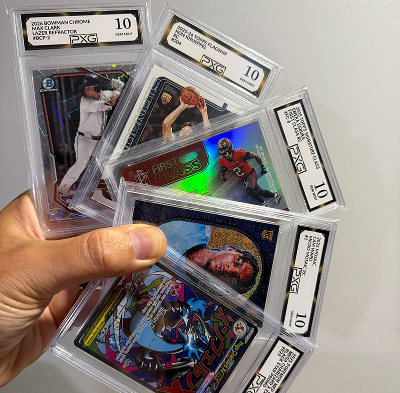
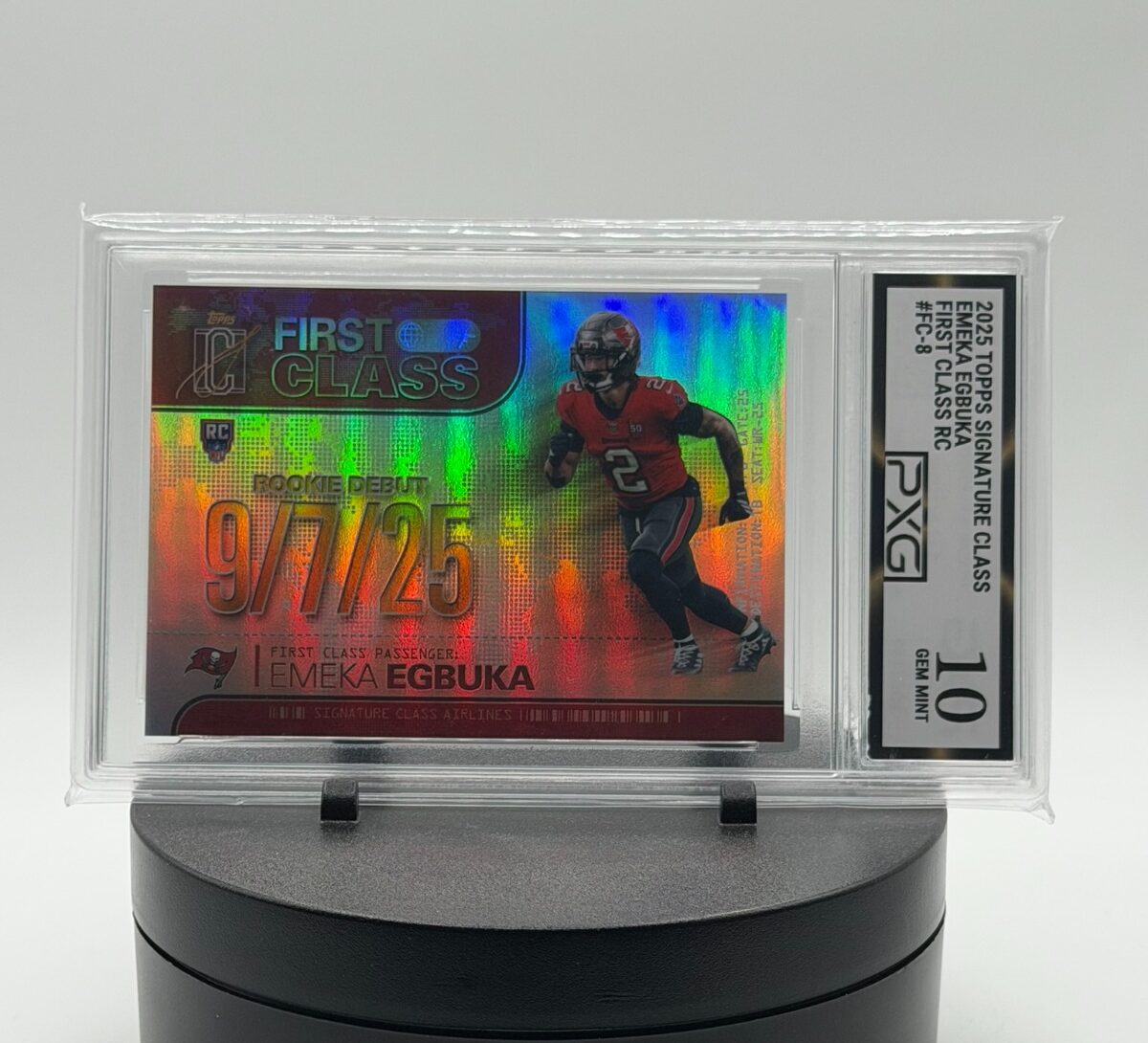
Grading still serves important purposes. It protects the card, provides a consistent condition assessment and turns a loose card into a finished collectible that is easier to display, organize and discuss. Presentation matters because collectors want graded slabs that look good in a case, on a shelf and in listing photographs. PXG focuses its resources on the card, the grade and a premium-looking slab while keeping grading affordable.
What PXG Brings to the Submission
Collectors should not have to choose between technology and judgment. PXG uses AI to assist with objective measurements and defect detection, then relies on human experience for context and nuance. The final result is one overall whole-number grade based on the card’s complete condition.
We also believe cost and presentation belong in the same conversation. PXG offers grading from $15 to $19 per card depending on submission size, an average turnaround of approximately three weeks and American-made slabs produced in Denver. The company remains independently owned, which allows grading decisions to stay focused on the card rather than outside corporate interests.
To review PXG grading and prepare your next submission, visit www.pxgrading.com. Choose the cards carefully, protect them properly and submit with realistic expectations. Those habits can prevent many expensive grading mistakes before they happen.
Card Grading Questions
What is the most common card grading mistake
Submitting without carefully checking the surface is one of the most common problems. Scratches, dents and print lines can be difficult to see unless the card is tilted under bright light.
Should every valuable card be graded
No. Consider the card’s condition, collector demand, your reason for grading and the total submission cost. Personal value can also justify grading even when resale is not the goal.
How should cards be packaged for grading
PXG recommends placing each card in a penny sleeve and semi-rigid holder, keeping the submission in order and cushioning the cards inside a sturdy mailer or box.
Does card grading always increase value
No. A grade can improve buyer confidence, protection and presentation, but market demand ultimately determines what a card will sell for.
How much does PXG card grading cost
PXG pricing is $19 per card for five cards, $18 per card for ten, $17 per card for 25, and $15 per card for a 100-card submission.
How long does PXG card grading take
PXG currently averages approximately three weeks from intake through grading and encapsulation. Shipping time is separate and can vary by carrier and destination.
PXG – Precision Grading. Premium Presentation. Real Collector Value.