PXG vs. PSA, Beckett, SGC, CGC and TAG: Which Card Grading Company Is Right for You?
Choosing a card grading company is no longer as simple as sending every card to the biggest name in the hobby. Today’s collectors can choose from established companies such as PSA, Beckett Grading Services (BGS), SGC and CGC, technology-focused services such as TAG, and growing collector-focused companies such as PXG—Prime Excellence Grading.
Each company offers a different combination of grading philosophy, market recognition, pricing, turnaround time, slab design and label presentation. The right choice depends on what matters most to you. Are you grading a major vintage card for resale? Building a matching personal collection? Submitting modern rookies in quantity? Looking for detailed grading information? Or searching for affordable card grading without sacrificing the appearance of your finished slabs? Before choosing, it also helps to understand the costly card grading mistakes collectors should avoid.
This guide compares PXG, PSA, Beckett, SGC, CGC and TAG to help you decide where your cards belong—and explains why PXG offers a better overall value for many collectors. To see PXG grading services and current submission options, visit www.pxgrading.com.
What Does a Card Grading Company Do?
A professional card grading company evaluates the condition of a trading card and assigns it a numerical grade. The card is then encapsulated in a protective holder—commonly called a slab—with a label identifying the card, its grade and a certification number.
Although standards vary by company, card grading generally focuses on four major areas:
- Centering: How evenly the card’s image and borders are positioned.
- Corners: The sharpness and condition of all four corners.
- Edges: Chipping, whitening, roughness and other edge damage.
- Surface: Scratches, print lines, dents, stains, dimples and loss of gloss.
Graded cards can be easier to catalog, display and sell because buyers receive an independent opinion of condition. Graded slabs also offer physical protection and a more polished presentation. However, grading does not guarantee that a card will increase in value. The player or character, scarcity, collector demand, card condition and reputation of the grading company all influence the market.
Card Grading Companies at a Glance
| Company | Basic Approach | What Collectors Should Compare |
| PXG | AI-assisted analysis plus hands-on human grading, resulting in one clear overall grade | Affordable pricing, approximately three-week turnaround, independent ownership, American-made slabs and premium labels |
| PSA | Traditional professional grading on a 1–10 scale | Total price, service tier, turnaround and whether name recognition justifies the added cost for the specific card |
| Beckett/BGS | Category subgrades with half-point increments | Pricing, turnaround and whether the half-point scale fits the collector’s preference |
| SGC | Professional grading with a distinctive black insert | Pricing, turnaround and preference for its standardized holder style |
| CGC | Team evaluation aided by technology | Service cost, grading scale and preferred label presentation |
| TAG | Machine-learning imaging followed by human verification | Card eligibility, service cost and preference for digital reports |
Pricing, accepted cards, service levels and turnaround estimates can change. Always review the current information on each company’s official website before submitting.
PXG—Prime Excellence Grading
PXG was built around a straightforward idea: collectors should not have to choose between technological consistency, experienced human judgment, affordable pricing and a premium-looking slab.
AI-Assisted Analysis With Human Judgment
PXG combines AI-assisted analysis with hands-on human grading. Technology helps evaluate measurable details and promotes consistency and objectivity. Experienced human graders then examine the card for context and nuance—the subtle characteristics that software may not fully interpret on its own.
That balance matters. Technology can assist with repeatable measurements, but cards are physical collectibles with different materials, printing methods, finishes and manufacturing characteristics. Human review helps distinguish between production traits, actual damage and defects that deserve greater weight.
At PXG, the technology supports the grader; it does not eliminate the grader.
A Detailed Evaluation
PXG examines cards under approximately 5-15× magnification and evaluates centering, corners, edges and surface on both the front and back. These categories are considered together when determining the final whole-number grade.
The goal is not to hand out the grade a collector hopes to receive. It is to provide a consistent and credible assessment that collectors and buyers can take seriously. Our guide to what makes a trading card earn a Gem Mint 10 explains how those condition factors come together.
One Clear Overall Grade
PXG does not offer subgrades. Every card receives one clear overall grade based on the complete evaluation of its centering, corners, edges and surface.
That simplicity is intentional. PXG does not add layers of reporting or extra services simply to raise the price of a submission. By concentrating resources on what matters most—the card, the integrity of its grade and the quality of the finished slab—PXG can keep grading affordable while still delivering a product collectors are proud to own.
Veteran-Owned and Independently Operated
PXG is a veteran-owned, independently operated grading company. It is not owned by a large corporation, investment group, auction house or marketplace. That independence allows PXG to keep its priorities centered on collectors, grading integrity and the long-term credibility of every card placed in a PXG slab.
Every PXG grade is based on the card itself and the company’s established grading standards. Grades are not influenced by a card’s owner, potential selling price or outside marketplace interests. AI-assisted analysis provides objective support, while experienced human graders make the nuanced evaluations required to reach the final grade.
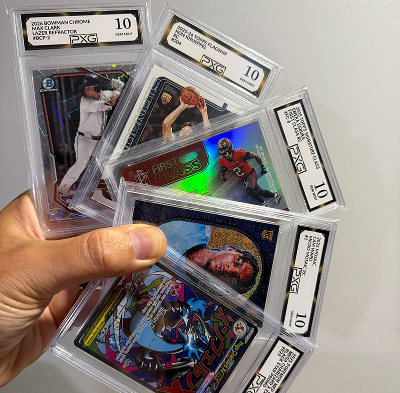
Premium American-Made Slabs and Labels
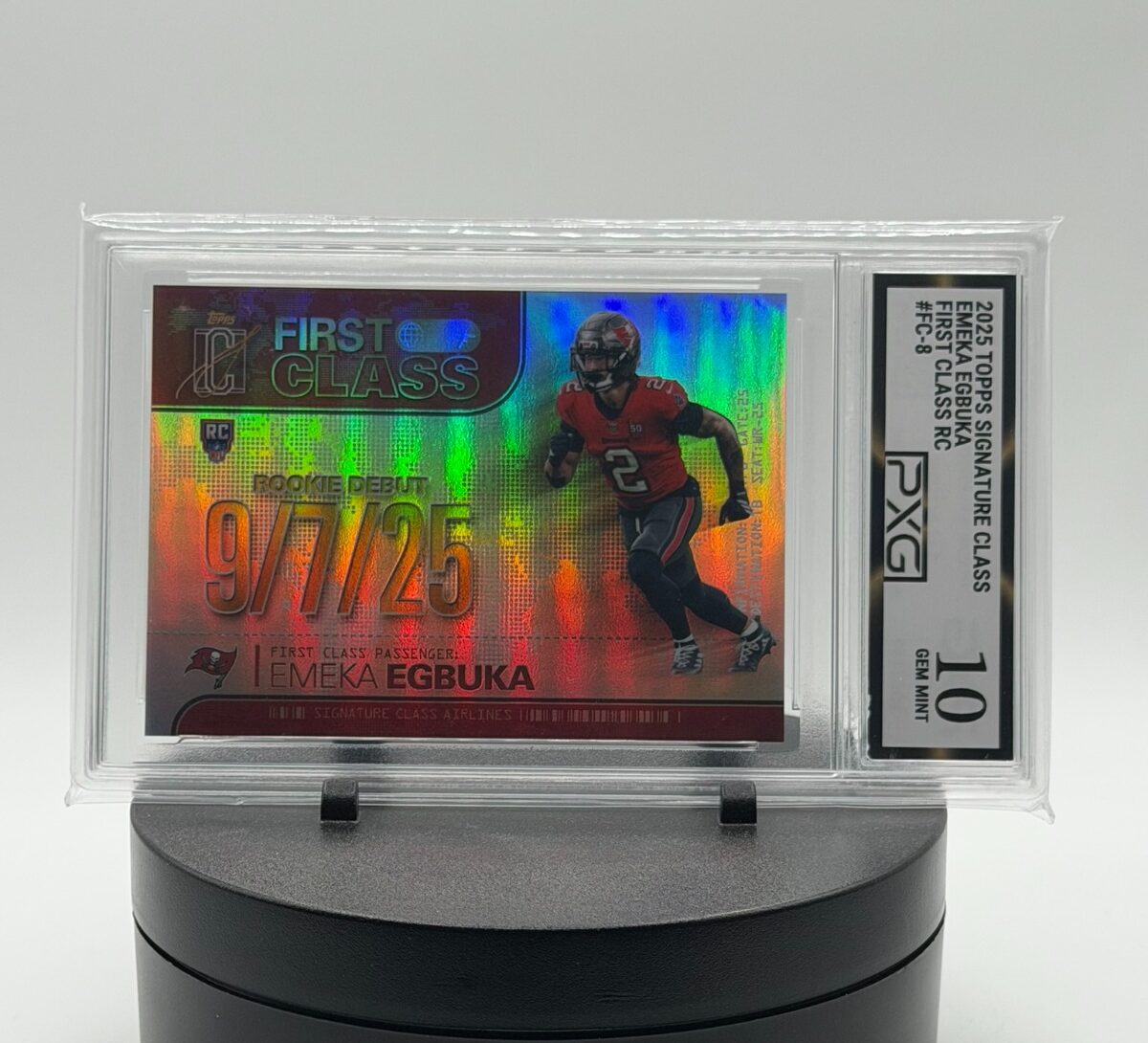
A graded card is also a display piece. PXG places a major emphasis on presentation, using premium slabs manufactured in Denver, Colorado. Choosing PXG means your card is protected in a slab made in America—not a generic presentation treated as an afterthought.
PXG pairs those American-made slabs with visually striking labels designed to complement the card inside. Collectors frequently tell us that PXG labels help their cards stand out in display cases, online listings and social media posts.
That presentation can be especially valuable for colorful parallels, autographs, rare inserts, Pokémon cards and other collectibles where visual appeal is a major part of ownership. Examples of finished PXG graded slabs can be viewed at www.pxgrading.com.
Affordable Card Grading
Grading costs can quickly add up, particularly for collectors submitting modern rookies, prospect cards, parallels or complete groups. Collectors deciding what to send can begin with our list of sports and Pokemon cards worth grading in 2026. PXG is positioned as an affordable card grading option, with straightforward pricing intended to make professional grading accessible to everyday collectors—not only owners of extremely expensive cards. For a broader fee comparison, review how much it costs to have a trading card graded in 2026.
PXG uses clear package pricing so collectors can choose a submission size that fits their collection and budget:
| Submission Size | Price per Card |
| 5 cards | $19 |
| 10 cards | $18 |
| 25 cards | $17 |
| 100 cards | $15 |
Every package offers an average turnaround time of approximately three weeks. Our guide to how long card grading takes in 2026 explains what turnaround estimates include and why waits vary between companies. Current pricing and submission information can be confirmed at www.pxgrading.com.
PXG may be the right choice if you value:
- AI-assisted objectivity combined with human nuance
- Careful examination and defined grading standards
- One clear overall grade without unnecessary extras
- Affordable submission pricing
- An average turnaround time of approximately three weeks
- American-made slabs manufactured in Denver, Colorado
- Premium, collector-focused label designs
- A veteran-owned, independent and collector-focused grading company
- A finished product designed to look impressive in person and online
Current Submission Availability Matters
Availability update as of September 2, 2026: Collectors comparing card grading companies should look beyond the advertised price and ask whether the service tier they actually want is open.
- PSA: PSA’s Value tiers remain temporarily paused. Its August 25 backlog update reported approximately 10.9 million cards in its active global backlog and stated that the company was still working toward reopening Value submissions. Higher-priced PSA service levels may still be available, but the affordable Value options are not currently open.
- Beckett/BGS: Beckett states that its Base and Standard card grading services are temporarily paused, with card grading submissions expected to reopen September 15, 2026.
- TAG: TAG paused Basic and Standard submissions on May 1 and Express submissions on May 28. It began offering limited submission drops on August 27, but the first drop was a $79-per-card TAG Score service managed through a randomized queue, with access not guaranteed. Its routine lower-priced submission options therefore remain restricted.
These pauses are not the only consideration when choosing a grading company, but they matter. A low advertised price or familiar brand name does not help a collector when the desired service is unavailable, restricted or backed up for months.
PXG is open and accepting submissions. Collectors can choose straightforward packages from 5 to 100 cards, pay as little as $15 per card and receive an average turnaround time of approximately three weeks. PXG’s independent size allows it to stay focused on manageable volume, careful grading and personal accountability instead of accepting more cards than it can reasonably process. Current PXG submission options are available at www.pxgrading.com.
Status information above is based on official company service and backlog updates reviewed September 2, 2026. Submission availability can change.
PSA Card Grading
Professional Sports Authenticator, better known as PSA, is a long-established name in card grading. PSA uses a 1–10 grading scale and places graded cards in holders displaying the grade and certification number.
Many buyers recognize PSA graded cards, but recognition alone does not make PSA the best choice for every submission. Collectors should compare the full grading cost, service tier, value limits, turnaround and finished presentation rather than choosing automatically based on the name printed on the label.
A grading choice that may make sense for one high-value card can become unnecessarily expensive when submitting groups of modern rookies, parallels or personal-collection cards. PXG gives collectors a more affordable path, an average three-week turnaround, detailed evaluation and a premium American-made slab without asking them to pay primarily for a legacy name.
When comparing PXG vs. PSA, consider:
- The complete cost of the submission
- The turnaround for the selected service tier
- Whether the card’s potential value justifies the expense
- Whether you prefer PSA’s standardized label or PXG’s card-focused presentation
- Whether independent, veteran-owned grading matters to you
Beckett Grading Services (BGS)
Beckett Grading Services is commonly referred to as BGS. Its grading system evaluates centering, corners, edges and surface and uses a 1–10 scale with half-point increments.
PXG also evaluates the four major grading categories, but it does not issue separate subgrades. Instead, collectors receive one straightforward whole-number grade representing the card’s overall condition. This streamlined approach helps PXG keep costs down and focus its time and resources on the card and slab itself.
If you are not committed to matching an existing BGS collection, compare the price, turnaround, slab appearance and overall value before submitting. PXG offers detailed grading, hybrid AI-and-human analysis and a premium American-made slab at pricing designed for everyday collectors.
When comparing PXG vs. Beckett/BGS, consider:
- Whole-number grades versus half-point grades
- Separate subgrades versus one clear overall grade
- Total submission cost
- Current turnaround time
- The appearance of the slab and label
- The benefits of AI assistance paired with human judgment
SGC Card Grading
SGC is an established grading company often associated with vintage sports cards. Its slabs use a dark insert surrounding the card, creating a standardized look across an SGC collection.
That holder style is a matter of preference. Collectors who want the label and overall presentation to complement the individual card may prefer PXG’s more visually distinctive approach.
Collectors considering SGC should compare current pricing and turnaround with PXG’s clear $15–$19 per-card package pricing and average three-week turnaround. They should also compare where the slabs are made: PXG uses slabs manufactured in Denver, Colorado.
When comparing PXG vs. SGC, consider:
- The total price for your submission size
- Current turnaround time
- Standardized presentation versus card-focused labels
- American-made slab construction
- Independent ownership and collector-focused service
CGC Cards Grading
CGC Cards grades sports cards, trading card games and non-sports cards. Its published process uses multiple professionals aided by technology, and its scale distinguishes between Gem Mint 10 and Pristine 10 grades.
Collectors should decide whether those separate top-grade designations are useful to them and compare CGC’s current cost, turnaround and presentation with PXG. PXG keeps the final grade straightforward while combining AI-assisted analysis with hands-on human review.
When comparing PXG vs. CGC, consider:
- The grading scale and top-grade distinctions
- Price and current turnaround
- Label and slab appearance
- PXG’s independent, veteran-owned operation
- PXG’s American-made slabs and affordable package pricing
TAG Grading
TAG uses machine-learning software and specialized imaging to analyze card measurements, surfaces, corners and edges. It translates a detailed underlying score into a 1–10 grade and provides a digital report for eligible submissions.
TAG states that human experts verify identified defects before finalization. PXG takes its own balanced approach: AI-assisted analysis promotes objectivity and consistency, while experienced human graders evaluate nuance and determine the final grade.
Collectors comparing TAG and PXG should check whether their card type, size, thickness and autograph category are eligible. They should also compare cost and decide whether a digital report or the complete physical presentation of the slab and label matters more for their collection.
When comparing PXG vs. TAG, consider:
- Card eligibility and restrictions
- Current service pricing and turnaround
- How technology and human judgment are balanced
- Digital reporting versus physical slab presentation
- PXG’s American-made slabs and independent ownership
AI Card Grading vs. Human Card Grading
The future of card grading is not necessarily a choice between computers and people. Both approaches offer advantages, and both have limitations when used alone.
Technology can support consistency by helping identify measurements, patterns and visible defects. It can reduce the influence of fatigue or momentary human variation. However, trading cards are not uniform laboratory samples. Foil patterns, textured surfaces, intentional design elements, printing variations and unusual materials can require interpretation.
Human graders bring experience and context. They can consider whether a visible characteristic is damage, a manufacturing issue or part of the card’s intended design. However, entirely manual processes can introduce natural variation between graders.
PXG’s philosophy is that the strongest process uses both. AI-assisted analysis adds objective support, while experienced human evaluation supplies context, nuance and accountability. This combination is central to what makes PXG different.
Does the Grading Company Affect a Card’s Value?
The name on a graded slab can influence buyer confidence and resale demand, but it is only one part of the card’s value. A card’s player or character, rarity, set, autograph, serial number, eye appeal and overall demand remain critical.
Legacy companies may command stronger resale premiums in some segments because buyers have years of sales data and familiarity with their slabs. A newer grading company must earn trust through consistent standards, accurate grading, professional service and a product collectors genuinely want to own.
PXG is building that trust by focusing on the complete collector experience: precise examination, AI-assisted objectivity, human judgment, independent ownership, accessible pricing, American-made slabs and premium presentation. For collectors grading cards to display, protect, trade or sell at an approachable price point, that combination can provide better overall value than paying more primarily for a familiar grading-company name.
Before choosing any grading company, ask:
- What is the purpose of grading this card?
- How important is resale recognition compared with submission cost?
- Do I want a whole-number grade, half grades or detailed digital scoring?
- Does the company accept this card’s size, thickness and autograph type?
- What slab and label will make the card look its best?
- Is the current turnaround appropriate for my plans?
- Do I understand the company’s grading scale and policies?
Which Card Grading Company Should You Choose?
There is no single answer for every collector or every card. A collector may choose a competitor to match slabs already in a collection or because a specific card fits a particular resale strategy. That does not mean the most familiar company automatically delivers the best value.
PXG is designed for collectors who want to grade smarter: combining AI-assisted analysis with experienced human grading, one clear overall grade, independent decision-making, an average three-week turnaround, $15–$19 per-card package pricing and premium American-made slabs with labels that make cards stand out.
The best grading company is the one that aligns with your card, your budget and your reason for grading. If you want objective technological support without losing human nuance—and a finished slab you will be proud to display—PXG deserves a place at the top of your list.
Grade Smarter With PXG
Your cards deserve more than a number. They deserve careful evaluation, strong protection and a presentation that brings the entire collectible together.
Discover affordable sports card and trading card grading from PXG—Prime Excellence Grading. Visit www.pxgrading.com to review current services and start your submission.
PXG—Precision Grading. Premium Presentation. Real Collector Value.
PSA, Beckett/BGS, SGC, CGC and TAG are trademarks or brands of their respective owners. PXG—Prime Excellence Grading is not affiliated with or endorsed by these companies. Service details may change; collectors should verify current information directly with each grading company before submitting.