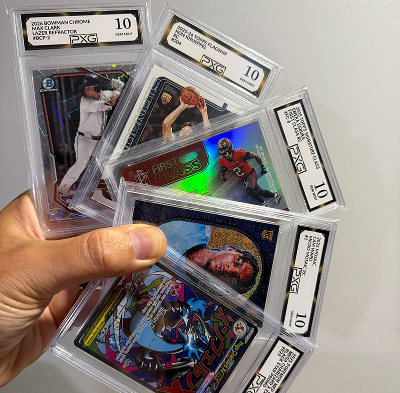
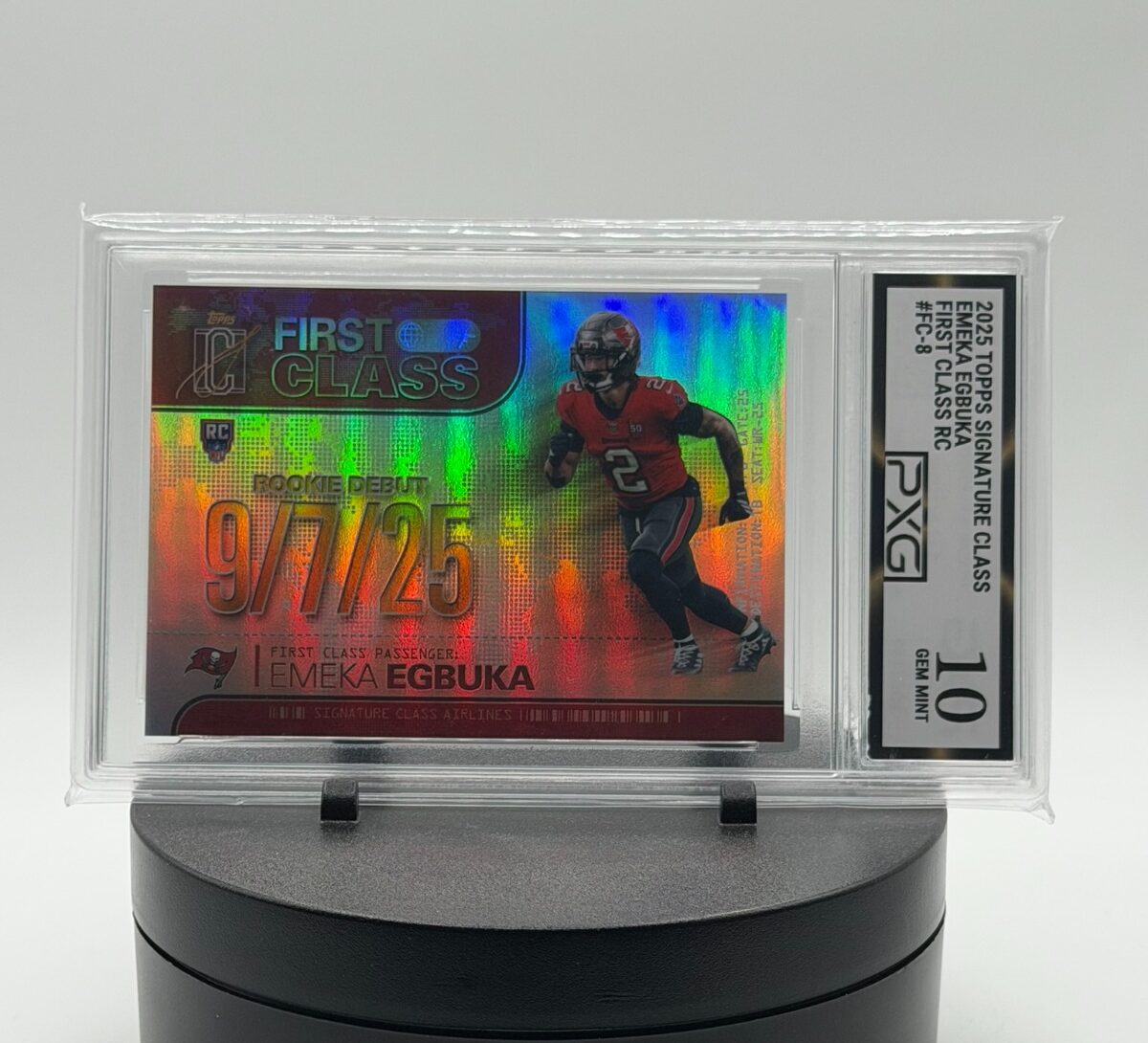
What Makes a Perfect 10? A Complete Guide to Trading Card Grading
Every collector knows the feeling. You pull a great card, examine it under the light and begin wondering: Could this card earn a 10?
A PXG 10 represents a card with exceptional overall condition. It must demonstrate strong centering, sharp corners, clean edges and a well-preserved surface on both the front and back. The grade is not determined by the card’s value, rarity, player, character or potential selling price. It is determined by the condition of the card itself.
At Prime Excellence Grading, every card is evaluated using the same card grading standards. PXG combines precise AI-assisted analysis with experienced human grading to reduce subjectivity while preserving the judgment needed to understand different card materials, finishes and manufacturing characteristics.
A card does not receive a PXG 10 because we restrict or reward certain grades. It receives a 10 because the card’s condition supports it. Collectors still deciding where to submit can review our card grading company comparison to see how PXG’s approach differs.
What Is Trading Card Grading?
Trading card grading is the professional evaluation of a card’s physical condition. A grader examines the card, determines whether it is authentic and evaluates the characteristics that affect its overall condition.
Once that evaluation is complete, the card receives a numerical grade and is sealed inside a protective holder commonly called a graded slab.
Card grading gives collectors a consistent way to describe condition. Instead of relying on vague terms such as “looks clean” or “near mint,” a professionally graded card receives a clearly defined numerical grade.
PXG uses a whole-number grading scale. Cards receive one clear overall grade, such as a 10, 9, 8 or 7. PXG does not offer separate subgrades. Centering, corners, edges and surface are all carefully evaluated, but they work together to determine the card’s final overall grade.
This focused approach helps PXG keep card grading affordable while concentrating on what matters most: the card, the accuracy of the grade and the quality of the finished slab.
What Does a Perfect 10 Mean in Card Grading?
Collectors commonly use the phrase “perfect 10” to describe a card receiving the highest grade available. However, a grade of 10 should not be interpreted as a claim that the card is mathematically or microscopically flawless in every possible way.
Trading cards are manufactured products. Even cards pulled directly from sealed packs can have small printing or production variations.
A PXG 10 is a card that meets PXG’s highest overall condition standard. It must present exceptionally well and remain strong across all four grading categories:
- Centering
- Corners
- Edges
- Surface
A card cannot rely on one outstanding characteristic to overcome a significant defect elsewhere. Excellent centering does not erase a damaged corner. Sharp corners do not cancel a deep surface scratch. Every part of the card contributes to the final grade.
The Four Areas PXG Evaluates on Every Card
PXG examines both the front and back of every submitted card. The four primary grading areas are evaluated together to determine one overall grade.
1. Centering
Centering measures how evenly the printed design is positioned within the borders or intended layout of the card.
On cards with visible borders, PXG measures the distance between the printed image and the edges of the card. Borderless cards require evaluation of design elements, framing, logos, text and other visual reference points.
PXG does not estimate centering by simply glancing at the card. AI-assisted measurement helps provide objective centering data that supports the grader’s evaluation.
For a PXG 10, front centering should normally be 55/45 or better from left to right and top to bottom. Centering of up to 57/43 may be considered only when the remainder of the card is otherwise exceptionally strong.
Back centering for a PXG 10 must be 75/25 or better.
A card does not always need mathematically perfect 50/50 centering to earn a 10. It must fall within PXG’s defined standards and remain strong throughout the rest of the evaluation.
2. Corners
Corners are among the most important areas evaluated during card grading. They are also some of the easiest parts of a card to damage.
PXG examines every corner on the front and back under magnification. Graders look for:
- Whitening
- Softness
- Rounding
- Fraying
- Bends
- Compression
- Layer separation
- Small touches of wear
- Manufacturing damage
A corner may appear sharp to the naked eye while showing whitening, fiber separation or compression under magnification.
At PXG, corners carry particular importance because corner damage can indicate handling, impact or deterioration. A card seeking a 10 should have sharp, well-preserved corners that maintain their structure under close inspection.
One noticeably damaged corner can prevent an otherwise attractive card from receiving the highest grade.
3. Edges
Edges include the entire perimeter of the card on both the front and back.
PXG checks each edge for:
- Chipping
- Whitening
- Flaking
- Rough cuts
- Dents
- Indentations
- Peeling
- Fraying
- Layer separation
- Color loss
Dark-bordered cards often reveal edge whitening more clearly than cards with white borders. Chrome, foil and premium card stocks may experience flaking or separation along the edges. Vintage cards may show natural wear from years of handling or storage.
Factory cutting can also affect edge quality. A card can come directly from a pack with rough edges, small chips or an uneven cut.
For a card to earn a PXG 10, its edges must remain exceptionally clean and intact. Minor manufacturing characteristics are considered in context, but visible damage or meaningful wear can lower the final grade.
4. Surface
The surface is the largest area of the card and can contain defects that are difficult to see without proper lighting and magnification.
PXG examines the front and back surfaces under multiple lighting angles. The card may be tilted and rotated so glare reveals defects that are invisible when viewed straight ahead.
Surface inspection includes checking for:
- Scratches
- Scuffs
- Print lines
- Dents
- Dimples
- Creases
- Stains
- Fingerprints
- Wax or residue
- Missing ink
- Roller marks
- Gloss loss
- Foil damage
- Indentations
- Surface impressions
Chrome, holographic, refractor and foil cards require particularly careful inspection because reflective finishes can conceal fine scratches and print lines.
A card may look excellent inside a sleeve but reveal multiple surface defects once removed and inspected under strong light. A significant scratch, dent, crease or indentation can prevent a card from receiving a 10 even when the centering, corners and edges are strong.
Both the Front and Back Matter
Collectors naturally focus on the front of a card because that is the side most often displayed. Card grading requires evaluation of both sides.
The back may contain corner whitening, edge chipping, surface scratches, print defects, stains, off-centering, indentations, residue or paper loss. A clean front does not guarantee a PXG 10 if the back shows meaningful damage.
PXG evaluates the complete card. Front condition carries substantial visual importance, but defects on the back still contribute to the overall grade.
Before submitting a card for grading, collectors should always remove it carefully from its sleeve and inspect both sides under good lighting.
How Do the Four Grading Categories Work Together?
PXG evaluates centering, corners, edges and surface separately during the inspection process, but the card receives one overall whole-number grade.
The final grade represents the card’s complete condition. It is not a simple average in which one perfect category automatically cancels a serious defect in another.
Certain defects may limit the maximum grade a card can receive. Examples include:
- A rounded or damaged corner
- A deep surface scratch
- A dent or indentation
- A crease
- Heavy edge chipping
- Significant staining
- Severe centering problems
This prevents a card with three strong areas and one major problem from receiving a grade that overstates its true condition. The goal is for the number on the label to accurately represent the entire card.
What Commonly Prevents a Card From Receiving a 10?
Many cards narrowly miss a top grade because of small defects that are difficult to see without magnification.
The most common reasons include:
- Slight corner whitening
- A soft or compressed corner
- Surface scratches visible under angled light
- Print lines on chrome or foil cards
- Edge chipping
- Small dimples or indentations
- Off-centering
- Roller marks
- Back-surface wear
- Factory cutting damage
A card can be beautiful without meeting the standard for a 10. Receiving a 9 does not mean the card is poor quality. It usually means the card is exceptionally attractive but contains one or more condition issues that keep it from PXG’s highest grade.
Does a Pack-Fresh Card Automatically Grade 10?
No. “Pack fresh” describes where the card came from, not its condition.
Cards can leave the factory with off-centering, print lines, scratches, damaged corners, chipped edges, dimples, roller marks, surface impressions or poor cutting.
A card placed directly into a sleeve after opening may still receive less than a 10. Professional card grading evaluates the condition of the finished card. It does not assume a card is perfect because it came from a new pack, hobby box or factory-sealed product.
How PXG Uses AI and Human Grading
PXG combines a custom-built artificial intelligence system with hands-on evaluation by experienced human graders.
AI-assisted analysis helps PXG:
- Measure centering precisely
- Identify possible surface anomalies
- Highlight potential edge defects
- Support repeatable condition analysis
- Reduce reliance on visual estimation alone
Artificial intelligence does not replace the grader or independently determine the final grade.
Trading cards vary significantly. A grader must understand different card stocks, border designs, foil patterns, printing processes, intentional design elements and normal manufacturing characteristics. Human judgment supplies the context and nuance that technology alone cannot provide.
The combination creates a balanced process: Technology provides objective data. Human graders interpret the complete card.
That approach helps PXG improve consistency without removing the experience and judgment required for professional trading card grading.
Does PXG Give Subgrades?
PXG evaluates the same four core areas considered throughout the card grading industry: centering, corners, edges and surface. However, PXG does not print or sell separate subgrades.
Every card receives one clear, whole-number overall grade.
This decision helps PXG keep costs down and focus its resources on the accuracy of the final grade, the protection of the card and the presentation of the finished slab.
Collectors should not need to pay for extra numbers to understand whether a card earned a 10, 9 or 8. The final PXG grade is intended to represent the card as a complete collectible.
Can Vintage Cards Earn a PXG 10?
Yes, but age alone does not lower or improve a card’s grade.
A vintage card is evaluated according to its actual condition. Older cards often show wear because of handling, storage methods and the materials used during manufacturing. That may make high-grade vintage cards more difficult to find, but PXG does not award extra points simply because a card is old.
A vintage card that meets PXG’s highest standards can earn a 10. A modern card with factory damage can receive a lower grade. The card, not its age, determines the result.
Are Sports Cards and Pokémon Cards Graded the Same Way?
The four main condition categories remain consistent across sports cards, Pokémon cards and other accepted trading cards. PXG evaluates centering, corners, edges and surface regardless of the subject printed on the card.
However, different products require different expertise. A grader must understand the characteristics of traditional paper sports cards, chrome and refractor cards, foil and holographic Pokémon cards, autographed cards, die-cut cards, thick premium cards, vintage card stock and borderless modern designs.
A print line on a Pokémon holographic card may appear differently from a scratch on a chrome football card. A rough factory cut on a vintage baseball card requires different context from edge damage on a modern basketball card.
The categories remain consistent, but proper evaluation requires knowledge of the card being examined. If you are deciding what to submit, our guide to sports and Pokemon cards worth grading in 2026 offers a practical starting point.
How to Check a Card Before Submitting It for Grading
Collectors can perform a basic inspection before paying for professional card grading. Reviewing the costly card grading mistakes collectors should avoid can also help prevent damage, wasted fees and disappointing surprises.
Use strong adjustable lighting
Inspect the card under bright light and rotate it slowly. Angled light can reveal scratches, dents, dimples and print lines that are invisible from a single viewing position.
Examine both sides
Do not judge a card only by its front. Back corners, edges and surfaces frequently contain the defect that prevents a card from earning a 10.
Use magnification
A magnifying glass or jeweler’s loupe can help identify corner whitening, edge chipping and fine surface scratches. PXG examines cards under approximately 5–15× magnification when necessary.
Check the centering
Compare the borders and major design elements from left to right and top to bottom. Remember that borderless cards can still be off-center.
Handle the card carefully
Hold the card by its edges with clean, dry hands. Avoid touching reflective surfaces. Do not aggressively wipe or chemically clean a card, as improper cleaning can cause scratches or alteration concerns.
Package it securely
Place the card in a clean penny sleeve and then into a semi-rigid card holder. Protect the cards from movement, moisture and impact during shipping.
Pre-submission inspection cannot guarantee a particular grade, but it can help collectors identify obvious condition issues before submitting.
Frequently Asked Questions About Getting a Card Graded 10
Does a card need 50/50 centering to receive a PXG 10?
No. Front centering should normally be 55/45 or better. Centering up to 57/43 may be considered only when the remainder of the card is exceptionally strong. Back centering must be 75/25 or better.
Can a card with a small flaw still receive a 10?
A card does not have to be described as microscopically flawless, but any imperfection must fall within PXG’s highest overall condition standard. A meaningful corner, edge or surface defect can prevent a 10.
Is a PXG 10 guaranteed to increase a card’s value?
No grading company can guarantee future market value. The player, character, card scarcity, collector demand and overall market all influence the selling price of graded cards.
Does PXG’s AI system assign the final grade?
No. AI provides measurements and assists with identifying potential defects. An experienced human grader evaluates the complete card and determines the final grade.
Does PXG limit the number of 10s it awards?
No. PXG does not restrict high grades to control population numbers. Every card receives the grade supported by its condition. If a card earns a 10, it receives a 10.
Does an expensive card receive more favorable grading?
No. A card’s market value, rarity or resale potential does not determine its grade. The same condition standards apply to every submission.
Why Collectors Choose PXG Card Grading
A meaningful grade requires more than a number printed on a label. Collectors also deserve accuracy, protection, attractive presentation, reasonable pricing and a practical turnaround.
PXG provides:
- AI-assisted analysis combined with experienced human grading
- One clear whole-number overall grade
- Consistent evaluation of centering, corners, edges and surface
- Average turnaround of approximately three weeks
- Affordable pricing from $15 to $19 per card
- Premium slabs made in America, right in Denver, Colorado
- Spectacular, collector-focused labels
- Independent, veteran-owned operation
PXG does not add unnecessary services simply to increase the price. Our focus remains on the card, the integrity of the grade and the quality of the finished slab. Collectors can review how much trading card grading costs in 2026 and how long card grading takes in 2026 before planning a submission.
What Makes a PXG 10?
A PXG 10 represents exceptional overall card condition. It means the card demonstrated:
- Centering within PXG’s highest-grade standards
- Sharp, well-preserved corners
- Clean and intact edges
- A strong surface on the front and back
- Consistent quality across the entire card
- No significant defect that would limit the final grade
A high grade is not something PXG avoids, and it is not something PXG gives away. When a card earns a 10, the grade should be supported by the condition collectors can see and the defects our process is designed to detect.
That is what makes a PXG 10 meaningful.
Ready to have your sports cards, Pokémon cards or other collectibles professionally evaluated? Review current submission options at www.pxgrading.com.
PXG – Precision Grading. Premium Presentation. Real Collector Value.